1、 Principles of waste liquid treatment
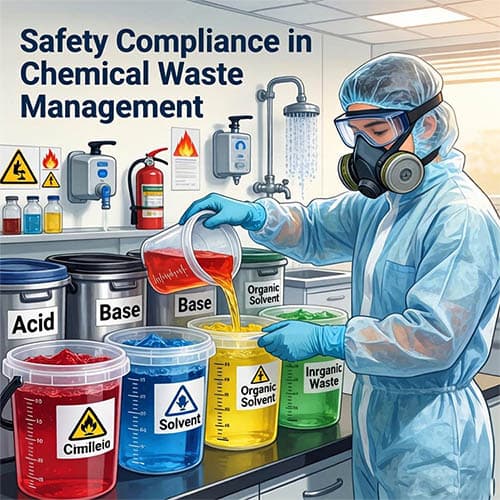
High concentration waste acid and alkali liquids should be neutralized before discharge. High concentration organic solvents containing small amounts of analyte and other reagents should be recycled and reused. High concentration waste liquids used for recycling should be stored centrally for easy recovery; Low concentration treated discharge should be stored in containers and conditions determined based on the properties of the waste liquid. Different waste liquids are generally not allowed to be mixed, and should be kept away from light and heat sources to avoid adverse chemical reactions. The waste liquid storage container must be labeled, indicating the type, storage time, etc.
2、 Waste liquid treatment method
Waste liquids containing mercury, chromium, lead, cadmium, arsenic, phenol, and cyanide must be treated to meet standards before being discharged.
The laboratory treatment method is as follows:
2.1 Treatment of mercury containing waste liquid:
If metal mercury is accidentally scattered in the laboratory (such as breaking a thermometer), it must be removed in a timely manner. If using a dropper or a thin copper sheet or wire soaked in an acidic solution of mercury nitrate, collect and cover the beaker with water. Mercury particles scattered on the ground should be sprinkled with sulfur powder to generate less toxic mercury sulfide; Or spray potassium permanganate solution acidified with hydrochloric acid (5:1000 volume ratio) and remove after 1 to 2 hours; Alternatively, spray a 20% aqueous solution of ferric chloride and remove it after drying (but this method cannot be used on metal surfaces as it may cause corrosion).
For the treatment of mercury containing waste liquid, the waste liquid can be adjusted to pH 8-10 and excess sodium sulfide can be added to generate mercury sulfide precipitate. Then, ferrous sulfate can be added as a co precipitant to generate iron sulfide precipitate, which can adsorb and precipitate mercury sulfide particles. After static separation, the clear liquid can be discharged, and the residue can be recovered by calcination or made into mercury salts.
2.2 Treatment of lead and cadmium waste liquids:
Adjust the pH of the waste liquid to 8-10 with alkali to generate Pb (OH) 2 and Cd (OH) 2 precipitates, and then add ferrous sulfate as a co precipitant. The precipitate can be mixed with other inorganic substances for sintering treatment, and the clear liquid is discharged.
If it cannot be processed in a timely manner, it needs to be stored in a waste liquid tank.
2.3 Treatment of waste liquids containing chromium, arsenic, phenol, and cyanide:
Reducing agents such as ferrous sulfate, sodium sulfite, and iron filings are added to the chromium containing waste liquid to reduce hexavalent chromium to trivalent chromium under acidic conditions. Then, bases such as sodium hydroxide, calcium hydroxide, and sodium carbonate are added to form Cr (OH) 3 precipitate from trivalent chromium, and the clear liquid can be discharged. After sedimentation and drying, it can be treated by roasting method to roast it together with coal slag, and after treatment, it can be buried.
Add calcium oxide to a pH of 8 to generate calcium arsenate and calcium arsenite precipitates, which co precipitate in the presence of Fe3+. Or make the pH of the solution greater than 10, add sodium sulfide, and react with arsenic to produce insoluble and low toxicity arsenic sulfide precipitate. The experiment of generating arsenic containing gas is conducted in a fume hood.
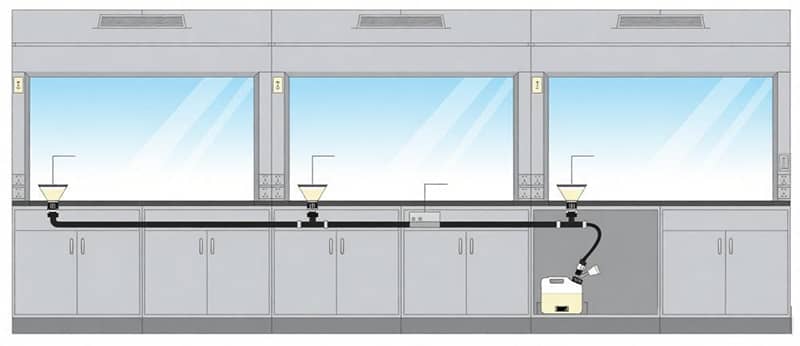
Low concentration phenol containing waste liquid can be treated with sodium hypochlorite or bleaching powder to oxidize phenol and carbon dioxide. High concentrations can be extracted using ethyl butyrate and repeatedly extracted with a small amount of sodium hydroxide solution. After adjusting the pH, perform heavy distillation and purify before use.
Low concentration waste liquid can be adjusted to pH 10 or above by adding sodium hydroxide, and then potassium permanganate powder (3%) can be added to decompose cyanide. If the concentration is high, alkaline chlorination can be used for treatment. First, adjust the pH to above 10 with alkali and add sodium hypochlorite or bleach powder. After sufficient criticism, the hydride decomposes into carbon dioxide and nitrogen, and is discharged after being left for 24 hours. Cyanide containing fees should not be poured indiscriminately or mixed with acid, as the volatile hydrogen cyanide gas generated is highly toxic.
2.4. Comprehensive waste liquid treatment
Adjust the pH of the waste liquid to 3-4 with acid and alkali, add iron powder, stir for 30 minutes, then adjust the pH to around 9 with alkali, continue stirring for 10 minutes, add aluminum sulfate or basic aluminum chloride coagulant, and perform coagulation precipitation. The supernatant can be directly discharged and treated as waste residue.
Wash the chloroform waste liquid with water, concentrated sulfuric acid (one tenth of the chloroform amount), pure water, and hydroxylamine hydrochloride solution (0.5% AR) at once. Wash twice with distilled water, dehydrate the washed chloroform with wastewater calcium chloride, let it sit for a few days, filter, and distill. The distillation rate is 1-2 drops per second. Collect the distillate with a boiling range of 60-62 degrees Celsius (below the standard box) and store it in a brown reagent bottle (rubber stopper can be used).
3、 Precautions for laboratory waste liquid treatment
3.1 Try to recycle the solvent and reuse it repeatedly without hindering the experiment.
3.2 For the convenience of processing, their collection and classification are often divided into:
a. Flammable substances;
b. Flame retardant substances;
c. Water containing waste liquid;
d. Solid substances, etc.
3.3 Substances that are soluble in water are easily lost as aqueous solutions. Therefore, attention should be paid when recycling. However, solvents such as methanol, ethanol, and acetic acid can be easily decomposed by bacterial action. Therefore, dilute the dilute solution of such solvents with a large amount of water before discharging.
3.4 The waste liquid containing heavy metals and other substances is decomposed into organic matter and treated as inorganic waste liquid.
3.5 Choose a container that is not damaged or corroded by waste liquid for collection. Label the composition and content of the collected waste liquid clearly and store it in a safe location.
3.6 Waste liquids that emit odors such as thiols and amines, as well as toxic gases such as cyanide and phosphine, and highly flammable waste liquids such as carbon disulfide and ether, should be treated appropriately to prevent leakage and should be treated as soon as possible.
3.7 Waste liquids containing explosive substances such as peroxides and nitroglycerin should be handled with caution and disposed of as soon as possible.
3.8 Waste containing radioactive substances must be collected using alternative methods and must be handled strictly in accordance with relevant regulations to prevent leakage and with caution.
4. The waste liquids listed below cannot be mixed with each other
① Peroxides and organic compounds;
② Cyanides, sulfides, hypochlorites, and acids;
③ Volatile acids such as hydrochloric acid and hydrofluoric acid, Volatile acid;
④ Concentrated sulfuric acid, sulfonic acid, hydroxy acid, polyphosphoric acid and other acids;
⑤ Ammonium salts, volatile amines, and bases.
Contact: Neil
Phone: +86-18205509969
E-mail: sales@zooany.com
Add: 118, Building 3, Tianrun City Phase II, Tianchang City, Anhui Province. China