200L double-layer glass reactor and high and low temperature integrated machine are a complete temperature control system designed for large-scale pilot production and small-scale production. This combination is widely used in the fields of pharmaceuticals, fine chemicals, new material synthesis, and biomedicine, meeting the precise temperature control requirements within a wide temperature range from -80 ℃ to+300 ℃. It is a key equipment connecting pilot scale and industrial production.
As a representative of large-scale double-layer glass reaction vessels, the 200L specification has a moderate volume and mature matching, which can meet the needs of mass production while maintaining the unique advantages of transparent and easy to observe glass reaction vessels. As a supporting temperature control core, the high and low temperature integrated machine integrates heating and cooling. The same device and the same thermal medium can achieve full temperature control from low temperature to high temperature without changing the medium, making operation convenient.
1. Kettle system
The 200L double-layer glass reactor is made of high borosilicate glass (GG17 material, expansion coefficient 3.3), which has excellent heat shock resistance and chemical stability. The effective volume of the kettle body is 200L, and the interlayer volume is about 40-60L, providing sufficient heat exchange space for temperature control.
The temperature resistance range of the kettle body can reach -80 ℃ to+300 ℃, which can meet the temperature requirements of the vast majority of reaction processes. The transparent nature of the kettle allows operators to intuitively observe the reaction state, color changes, crystallization process, and layering of materials, which is a unique advantage that stainless steel reaction kettles cannot match.
2. Mixing system
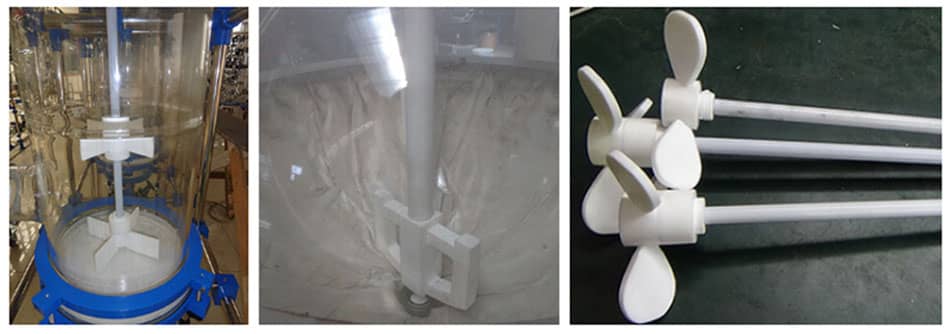
The stirring system is a key component to ensure the uniformity of the reaction. The 200L reactor is equipped with a high torque variable frequency motor, typically with a power of 750W and an adjustable speed range of 0-680rpm or 0-780rpm. It adopts variable frequency speed control, ensuring smooth and reliable operation.
The stirring blade is made of 304 stainless steel inner core and wrapped with polytetrafluoroethylene (PTFE) material, which combines high strength and excellent corrosion resistance. The mixing form can be selected as anchor type, paddle type or push type, and can be flexibly chosen according to the viscosity characteristics of the material. The mixing connection adopts universal joint method to ensure smooth transmission.
The sealing system adopts ceramic bearings and mechanical PTFE components for sealing, with good air tightness and a vacuum degree of up to 0.098Mpa, meeting the requirements of the vast majority of negative pressure reaction processes.
3. Configuration of kettle lid interface
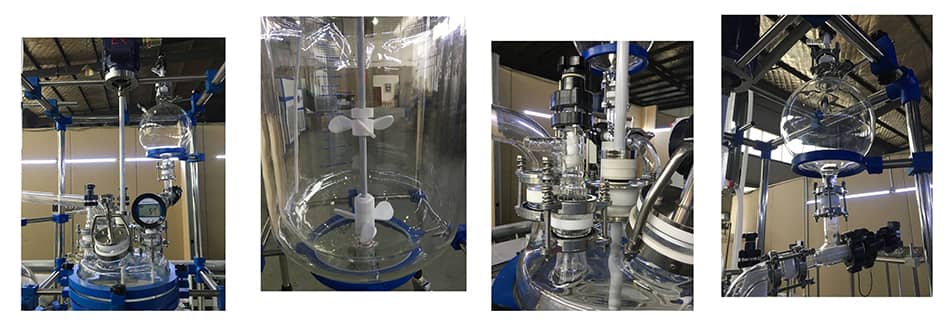
The 200L reaction kettle cover adopts a six port flange structure with complete interface configuration, meeting the multifunctional reaction requirements:
Mixing port: 60mm flange port, install mixer
Solid feeding port: 80mm or 95mm flange port, convenient for direct addition of solid materials
Constant pressure funnel mouth: 40 # or 50 # grinding mouth, used for droplet addition of liquid materials
Condenser interface: 50 # ball mill port, connected to condensing device
Temperature measuring port: 45mm flange or 29 # grinding port, equipped with PT100 temperature sensor
Vacuum/deflation port: 34 # standard port, used for vacuum or deflation operations
4. Framework and material feeding system
The whole machine adopts a stainless steel frame structure (SU304 material), which is compact and sturdy. The bottom is equipped with brake universal wheels, and the whole machine can move as a whole, making it easy to operate.
The discharge valve adopts a liquid free side discharge design, made of glass and PTFE material, to avoid residual contamination of materials. The discharge port is about 450mm above the ground, which is convenient for container placement.
5. Condensation and collection system
Equipped with an efficient vertical condenser as standard, with a condensation area of approximately 0.95-1.0 square meters, ensuring good condensation recovery efficiency. Equipped with a 10L collection bottle and a 5L drip bottle to meet the material processing requirements of the pilot scale.
1. Temperature control range and accuracy
The 200L high and low temperature integrated machine is a temperature control device designed specifically for 200L reaction vessels. The temperature control range can be selected according to process requirements, including -20 ℃ to+200 ℃, -30 ℃ to+200 ℃, or -80 ℃ to+200 ℃. The temperature control accuracy can reach ± 0.1 ℃ to ± 1 ℃, meeting the strict limitations of sensitive reactions on temperature fluctuations.
2. Heating and cooling system
The heating system adopts electric heating tubes, and the total power of the whole machine varies depending on the temperature control range, usually between 18kW and 30kW. The refrigeration system adopts imported fully enclosed compressors (such as Danvers or Panasonic brands) with sufficient cooling capacity, which can achieve rapid cooling.
It should be noted that the actual cooling effect of the high and low temperature integrated machine is affected by the exothermic reaction. A user once reported that the device was supposed to be able to drop to -80 ℃, but in reality it could only reach -40 ℃. After communication, it was found that this was because the exothermic reaction process was ignored. When selecting, the reaction heat load should be fully considered to ensure that the equipment capacity matches the actual process requirements.
3. Closed loop system
The high and low temperature integrated machine adopts a fully enclosed circulation system, which is equipped with an expansion container. The expansion container is insulated from the liquid circulation system and does not participate in the liquid circulation. The advantage of this design lies in:
At low temperatures: no water vapor absorption, avoiding condensation water from mixing with the heat transfer medium
At high temperatures: no oil mist evaporates, and the heat transfer oil is not oxidized or browned
Extended lifespan: The service life of the thermal conductive medium is significantly extended
4. Security protection function
The equipment is equipped with multiple safety protection functions, including delay protection, overcurrent protection, overheating protection, overtemperature protection, phase sequence protection, phase loss protection, high-voltage pressure switch, etc., to ensure the long-term reliable operation of the equipment.
1. Working principle
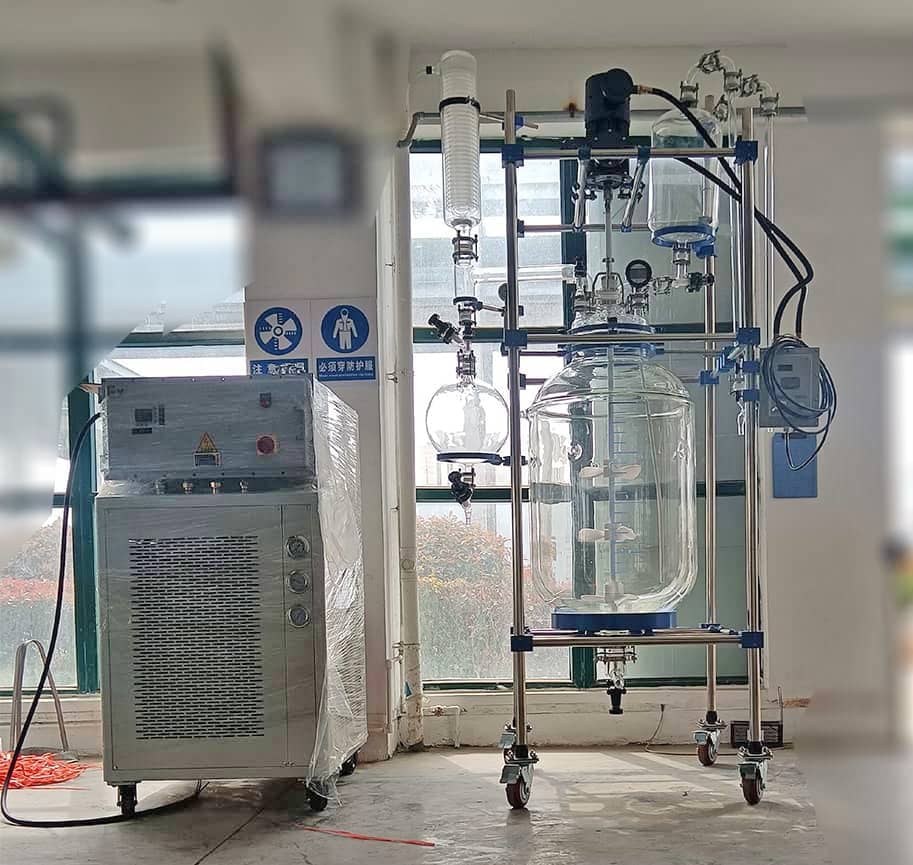
The 200L double-layer glass reaction kettle is connected to the high and low temperature integrated machine through pipelines to form a closed cycle temperature control system:
The high and low temperature integrated machine heats or cools the thermal medium to the set temperature
The circulating pump transports the medium through the outlet to the inlet at the bottom of the reaction vessel
The medium flows through the interlayer and exchanges heat with the materials inside the kettle
The medium returns to the integrated machine from the upper outlet of the reaction kettle and undergoes temperature adjustment again
Cycle back and forth to maintain a constant reaction temperature
2. Pipeline connection specifications
The pipeline connection must follow the principle of "bottom in and top out":
Integrated machine outlet → reaction kettle bottom inlet
Liquid outlet at the top of the reactor → Integrated machine return port
This connection method ensures that the interlayer is completely filled with thermal conductive medium, avoiding air resistance and achieving maximum heat transfer efficiency. It is recommended to use stainless steel corrugated pipes or heat-resistant silicone hoses for connecting pipes, and to add insulation layers to reduce heat loss.
3. Medium filling and emptying
Special high and low temperature thermal oil or synthetic silicone oil must be used, and the use of water or ethylene glycol solution is strictly prohibited, as steam pressure may be generated at high temperatures, posing a safety hazard. When adding heat transfer oil, pay attention to the level gauge. After the external circulation is turned on, the heat transfer oil level will decrease, and it is necessary to replenish the liquid to the appropriate position in a timely manner.
After filling, it is necessary to perform the emptying operation: turn on the circulation function, slightly loosen the outlet joint at the top of the reaction kettle until there are no bubbles flowing out of the continuous oil flow, then lock the joint and exhaust the air in the pipeline.
Contact: Neil
Phone: +86-18205509969
E-mail: sales@zooany.com
Add: 118, Building 3, Tianrun City Phase II, Tianchang City, Anhui Province. China