Laboratory PP sink is one of the most important components in modern laboratory furniture systems. These sinks are designed for chemical resistant sinks, polypropylene— A thermoplastic resistant polymer known for its excellent chemical, corrosion, and physical resistance.
Laboratories often deal with corrosive substances such as strong acids, alkalis, solvents, and chemical agents.
Today, PP laboratory sinks are widely used in:
Chemical laboratories
Pharmaceutical research facilities
Universities and teaching laboratories
Medical diagnostic laboratories
Food testing laboratories
Industrial research and development centers
Because of their strong chemical resistance, lightweight structure, and cost-effectiveness, ZOOANY laboratory PP sinks have become the preferred sink solution for laboratory furniture manufacturers and laboratory planners worldwide.
Polypropylene (PP) is a thermoplastic polymer widely used in chemical equipment, medical devices, and industrial applications.
It is known for its excellent balance of durability, chemical resistance, and lightweight properties.
High chemical resistance
Excellent impact strength
Lightweight structure
Good heat resistance
Moisture resistant
Non-toxic and environmentally friendly
These characteristics make polypropylene an ideal material for laboratory sinks.
Laboratories demand equipment that can withstand harsh conditions while maintaining safety and durability.
Polypropylene can resist most acids, alkalis, salts, and many organic solvents commonly used in laboratories.
Unlike ceramic sinks, PP sinks do not crack easily when glassware accidentally falls into them.
PP sinks are much lighter than stainless steel or ceramic sinks, making them easier to transport and install.
Compared to epoxy resin sinks, PP sinks are significantly more affordable.
With proper maintenance, PP sinks can last 5–15 years or longer.
A laboratory polypropylene sink typically consists of several engineered components.
The basin is the main container where washing and cleaning take place. It is usually deeper than household sinks to accommodate laboratory glassware.
The drain outlet connects the sink to laboratory waste systems. It is usually made of chemical-resistant polypropylene or PVC.
Some sinks include overflow holes to prevent water from spilling onto laboratory floors.
Raised edges help reduce splashing when cleaning equipment.
Laboratory faucets such as gooseneck taps or triple taps are typically installed near the sink.
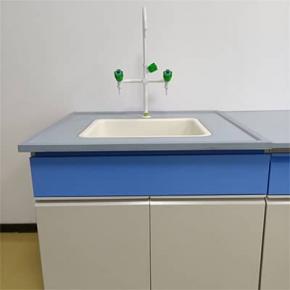

Laboratory sinks are available in various designs to suit different applications.
The most common type used in laboratory benches.
Best for:
Small laboratories
Standard washing tasks
Allows separation of cleaning tasks.
Example workflow:
One side for washing
One side for rinsing
A small sink designed for draining liquids or rinsing small equipment.
Commonly installed on laboratory workbenches.
Designed for large glassware such as:
Flasks
Cylinders
Beakers
Deep sinks are commonly used in research laboratories.
Laboratory sinks come in various sizes depending on laboratory design.
| Name | Model | Size | Color |
| Big size PP sink/tank | ZAS001 | 800*450*320mm | black, white, gray |
| Medium size PP sink/tank | ZAS002 | 550*450*310mm | black, white, gray |
| Small size PP sink/tank | ZAS003 | 440*340*280mm | black, white, gray |
| Medium size PP sink (Odor-proof) | ZAS004 | 550*450*280mm | black |
| Small size PP sink/tank (drain outlet with anti odor) | ZAS005 | 446*335*190mm | black |
| Anti overflow big PP sink/tank | ZAS101AY | 860*460*385mm | black, white, gray |
| Anti overflow medium PP sink/tank | ZAS102AY | 560*460*385mm | black, white, gray |
| Anti overflow small PP sink/tank | ZAS103AY | 460*360*290mm | black |
Custom sizes are also available for laboratory furniture manufacturers.
Polypropylene sinks can resist most laboratory chemicals.
PP material is flexible and resistant to cracking.
The smooth surface prevents chemical residues from sticking.
Easier installation compared with ceramic or stainless steel sinks.
PP sinks provide excellent value for money.
Laboratory PP sinks are used across many industries.
Schools and universities use PP sinks for student experiments.
Chemical research laboratories require acid-resistant equipment.
Drug development laboratories require reliable cleaning systems.
Testing laboratories must wash containers and instruments frequently.
Hospitals use PP sinks for diagnostic testing and equipment cleaning.
Installed above the laboratory countertop.
Advantages:
Easy installation
Lower cost
Simple maintenance
Installed below the countertop.
Advantages:
Modern appearance
Easier surface cleaning
Better hygiene
Laboratory faucets are designed specifically for scientific environments.
Common types include:
Gooseneck laboratory faucets
Wall mounted faucets
Emergency wash faucets
These faucets allow flexible water usage.
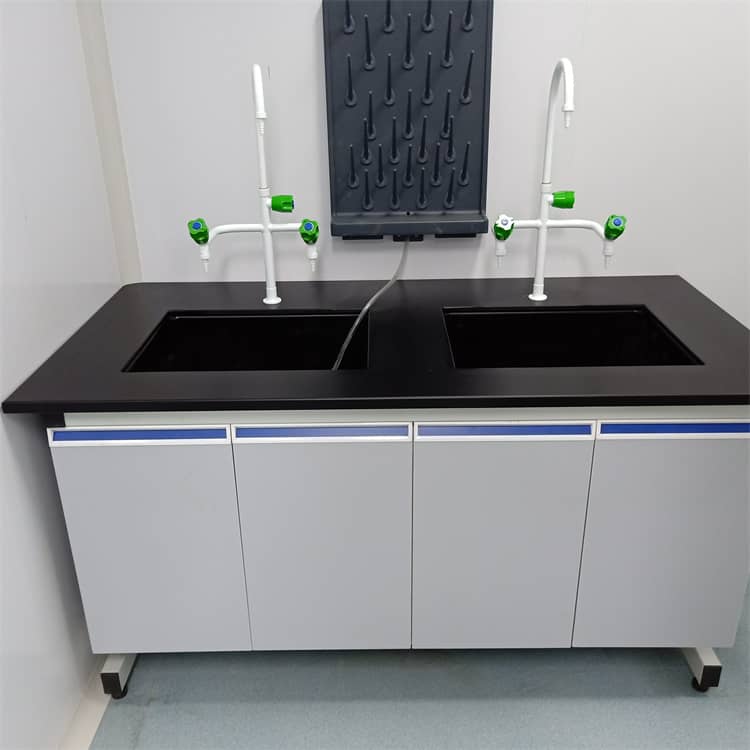
When purchasing a laboratory sink, several factors should be considered.
1) Material Purity
High-quality polypropylene ensures maximum chemical resistance.
2) Sink Thickness
Recommended thickness: 5–8 mm.
3) Manufacturing Process
High-quality sinks are made using:
Injection molding
Seamless welding
4) Size Compatibility
The sink must fit the laboratory countertop cutout.
5) Manufacturer Reputation
Choose experienced laboratory furniture suppliers.
Regular maintenance extends sink lifespan.
Recommended practices:
Clean regularly with mild detergent
Avoid extremely high temperatures
Prevent scratching with sharp objects
Inspect drainage pipes regularly
Proper maintenance can extend service life beyond 10 years.
| Material | Advantages | Disadvantages |
|---|---|---|
| PP Sink | Chemical resistant, lightweight, affordable | Moderate heat resistance |
| Stainless Steel | Strong and heat resistant | Corrosion risk |
| Ceramic | Heat resistant | Fragile and expensive |
| Epoxy Resin | Extremely durable | High cost |
PP sinks offer the best balance between cost, durability, and chemical resistance.
The global demand for laboratory furniture and equipment continues to grow due to:
Expansion of pharmaceutical research
Growth of biotechnology laboratories
Increased investment in scientific education
Development of chemical industries
As a result, the laboratory sink market is expected to expand steadily worldwide.
Polypropylene sinks are particularly popular because they offer excellent performance at an affordable price.
Laboratory equipment manufacturers are continuously improving sink technology.
Future innovations may include:
1) Improved Chemical Resistant Materials
Advanced polymers may increase durability.
2) Integrated Laboratory Systems
Sinks integrated with waste management systems.
3) Smart Laboratory Furniture
Integration with modern laboratory automation.
4) Modular Laboratory Design
Flexible sink systems that can be easily replaced or upgraded.
A laboratory PP sink is a sink made from polypropylene designed for chemical-resistant laboratory environments.
Yes. Polypropylene is resistant to most acids and alkalis used in laboratories.
Most polypropylene sinks can tolerate temperatures up to 120°C.
With proper care, they can last 10 years or more.
Yes. Polypropylene is recyclable and widely considered environmentally friendly.
Yes. Manufacturers often provide custom sizes and designs.
The Laboratory PP Sink is an essential part of modern laboratory infrastructure. Its excellent chemical resistance, lightweight construction, durability, and affordability make it one of the most widely used laboratory sinks in the world.
From universities to pharmaceutical research laboratories, ZOOANY China PP sink manufacturer&factory, provides safe and reliable washing solutions for scientific work.
For laboratories seeking a balance between performance, durability, and cost, polypropylene laboratory sinks remain one of the best choices available.
Contact: Neil
Phone: +86-18205509969
E-mail: sales@zooany.com
Add: 118, Building 3, Tianrun City Phase II, Tianchang City, Anhui Province. China