As a key safety equipment in laboratories, PP fume hoods play an irreplaceable role in high-risk experimental environments such as strong acids and alkalis due to their excellent corrosion resistance. With the rapid development of industries such as chemical engineering and biopharmaceuticals, there is an increasing demand for durability and safety of experimental equipment. PP fume hoods have become the preferred solution for modern laboratory construction due to their unique material advantages. This report systematically analyzes its core characteristics, application scenarios, and purchasing strategies, providing scientific basis for decision-making in related fields.
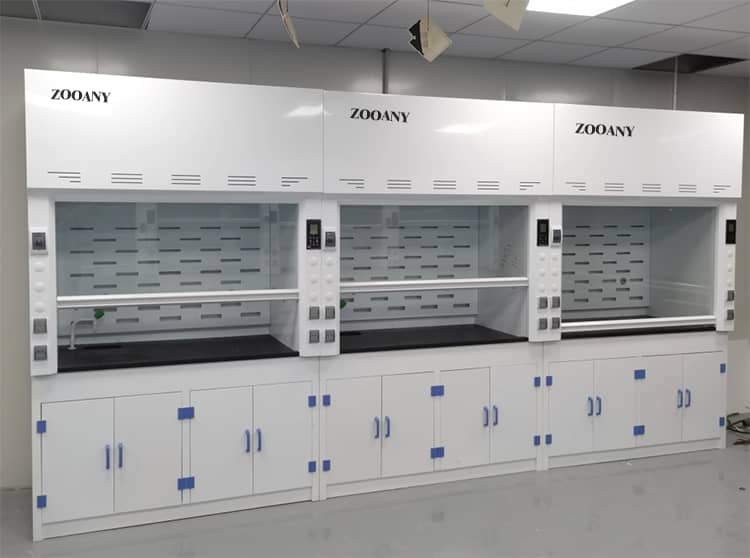
1. Core characteristics of PP fume hood
(1) Material advantages and corrosion resistance mechanism
The main body of the PP fume hood is made of polypropylene (PP) material, which has a highly stable molecular structure and can effectively resist the corrosion of strong corrosive reagents such as concentrated sulfuric acid and hydrofluoric acid. By using the same color welding rod seamless welding process, the cabinet forms a closed whole, eliminating the risk of gas leakage. Experiments have shown that in environments with long-term exposure to high concentrations of chemicals, PP material has no corrosion spots or structural deformation on its surface, and its service life is significantly better than traditional metal materials. This characteristic originates from the non-polar molecular chain structure of PP, which makes it inert to most acids, bases, and organic solvents, especially suitable for wet chemical experimental scenarios.
(2) Structural design and safety performance
Lightweight and modular: PP board significantly reduces weight, making it easy to transport and assemble on site. Modular design supports quick disassembly and assembly, adapts to the equipment migration needs of multinational institutions, and significantly improves restructuring efficiency.
Airflow control system: using a top hood exhaust system combined with a three-stage guide plate to ensure stable airflow on the operating surface and achieve efficient capture of exhaust gas. The window is equipped with 5mm tempered glass or acrylic material, which can be parked at any height, balancing convenient operation and safety protection.
Intelligent security configuration: optional variable air volume control system, automatic lifting window and energy-saving frequency conversion device, to build a multi-level active protection system. For example, in the event of a sudden gas leak, the intelligent system can respond immediately, reducing the risk of personnel exposure.
(3) Maintenance and environmental adaptability
The surface of PP is smooth and anti-static. Daily cleaning only requires wiping with a damp cloth, and residues are easy to remove. In high temperature and high humidity environments, as shown in the actual test cases of the Tropical Agriculture Research Institute, the equipment operates for a long time without deformation or performance degradation. In addition, the non-conductive property avoids the fire hazard caused by static sparks and expands its application scope in flammable and explosive experimental scenarios.
2、 Application scenarios and empirical analysis
(1) High corrosion environment in chemical laboratory
In chemical synthesis experiments, PP fume hoods come into direct contact with reagents such as nitric acid and hydrochloric acid, and their corrosion resistance ensures long-term safe operation. For example, after equipping a PP fume hood in a certain electroplating laboratory, there was no coating peeling or rusting on the surface of the equipment, and the health risks to the operators were significantly reduced. Compared to all steel materials, PP has a significantly reduced maintenance frequency in strong acid environments and a significant advantage in lifecycle cost.
(2) Biopharmaceuticals and Clean Production
The biological laboratory needs to strictly control microbial contamination. The seamless welding structure of the PP fume hood prevents bacterial growth, and the disinfectant resistance meets the requirements of the clean area. In the GMP workshop of pharmaceutical companies, the equipment maintains its structural integrity after repeated high-temperature sterilization, ensuring a sterile production environment. In addition, lightweight design facilitates flexible layout in clean rooms and adapts to the high-precision requirements of semiconductor production lines.
(3) Special industrial and mobile experimental scenarios
High temperature and high humidity environment: such as the Southeast Asian tropical rainforest research site, the PP fume hood has no metal component corrosion under continuous high humidity conditions, ensuring the accuracy of environmental monitoring data.
Field mobile experiment: Environmental protection agencies use its detachable structure to quickly assemble equipment for river pollution detection. After multiple disassembly and assembly, the airtightness still meets the standard, reflecting the reliability and adaptability of the equipment.
3、 Conclusion and Prospect
Laboratory PP fume hoods have become standard equipment in high-risk experimental environments due to their corrosion resistance, lightweight, and intelligent safety design. In the future, with the advancement of materials science, the high temperature resistance of PP material is expected to be further improved and expanded to more extreme working conditions. Laboratory builders should comprehensively evaluate usage scenarios, budgets, and safety requirements, and select suppliers with full lifecycle service capabilities to maximize equipment efficiency. Under the trend of industry standardization, PP fume hoods will continue to promote the upgrading of laboratory safety standards.
Contact: Neil
Phone: +86-18205509969
E-mail: sales@zooany.com
Add: 118, Building 3, Tianrun City Phase II, Tianchang City, Anhui Province. China