Organic waste gas treatment, also known as VOCs waste gas treatment. Due to the complexity of organic waste gas composition, the size of exhaust gas exhaust, and the level of exhaust gas concentration, organic waste gas treatment solutions and the waste gas treatment equipment used are also different. The introduction is as follows:
1. Overview of activated carbon adsorption box
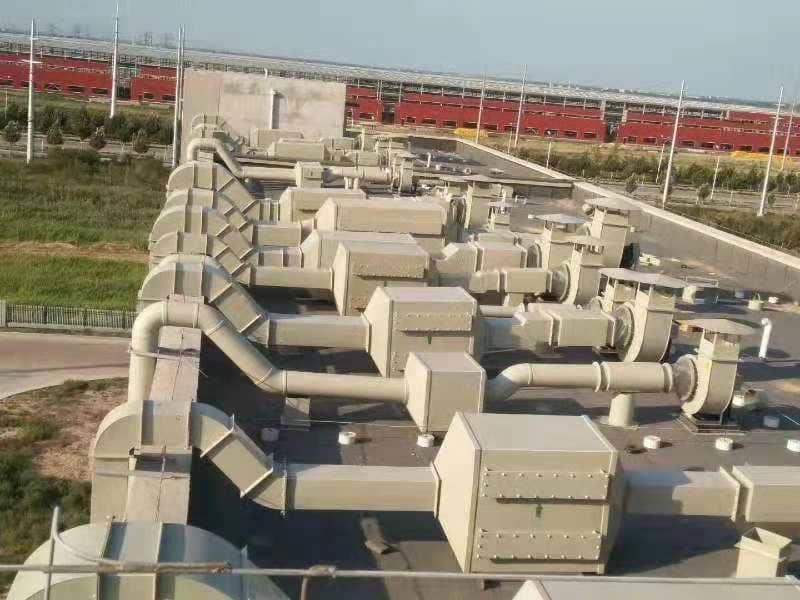
Activated carbon is a very small carbon particle with a large surface area, and there are even smaller holes in the carbon particles - capillaries. This kind of capillary has a strong adsorption capacity, because the surface area of carbon particles is large, so it can be fully contacted with gases (impurities), and when these gases (impurities) touch the capillary, they are adsorbed and play a purifying role. The essence of activated carbon adsorption is to use the characteristics of activated carbon adsorption to adsorb the organic solvent in the low-concentration and high-volume exhaust gas into the activated carbon, and the activated carbon adsorption method is mainly used for the removal of low-concentration gaseous pollutants. Activated carbon adsorption tower has the advantages of high adsorption efficiency, wide application area, convenient maintenance, can treat a variety of mixed waste gases at the same time, activated carbon has the effect of removing formaldehyde, benzene, TVOC and other harmful gases and disinfection and deodorization, activated carbon adsorption tower is now widely used in electronic component production, battery (battery) production, pickling operation, laboratory exhaust, metallurgy, chemical industry, medicine, painting, food, brewing and other waste gas treatment, among which it is most suitable for the purification of painting waste gas treatment.
2. Working principle
2.1. The dusty gas is powered by the fan, positive or negative pressure enters the activated carbon adsorption tower, because there is an unbalanced and unsaturated molecular gravity or chemical strength on the solid surface of activated carbon, so when the solid surface is in contact with the gas, it can attract gas molecules, so that it is concentrated and kept on the solid surface, and the pollutants are adsorbed. It is separated from the gas mixture, and the exhaust gas enters the equipment dust exhaust system after being filtered, and the purified gas is discharged at high altitude standards.
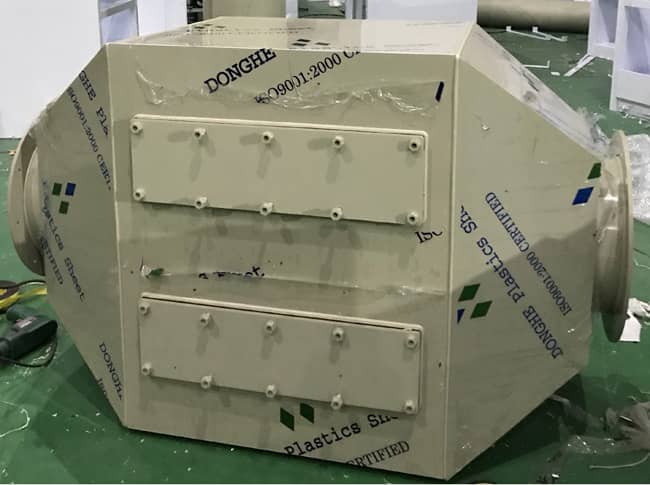
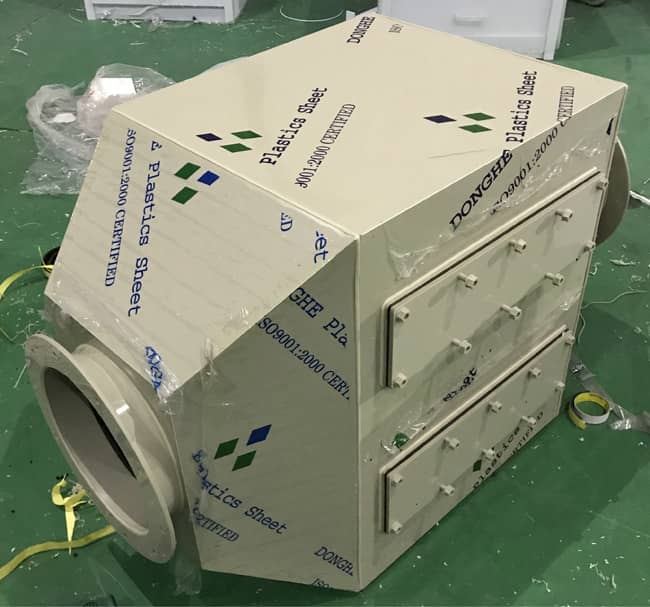
2.2. Activated carbon adsorption tower is a kind of dry exhaust gas treatment equipment, which is composed of a box and a unit filled in the box
3. Technical introduction
3.1. Activated carbon is a black powder, granular or pellet-shaped amorphous and porous carbon. The main ingredient is charcoal, and it also contains a small amount of oxygen, hydrogen, sulfur, nitrogen and chlorine. It also has a fine structure like graphite, but the grains are small and the layers are irregularly stacked. It has a large surface area (500~1000㎡/g). It has a strong adsorption capacity and can adsorb gases, liquids or colloidal solids on its surface. The adsorption of gas and liquid can be close to the quality of activated carbon itself.
3.2. Its adsorption effect is selective, and non-polar substances are easier to adsorb than polar substances. In the same series of substances, the higher the boiling point, the easier it is to be adsorbed, the higher the pressure, the lower the temperature, the higher the concentration, the greater the adsorption capacity, on the contrary, the decompression and heating are conducive to the desorption of gases.
3.3. Activated carbon is commonly used for the adsorption, separation and purification of gases, the recovery of solvents, the decolorization agent of sugar solutions, oils, glycerin, drugs, the deodorant of drinking water or refrigerators, the filter of gas masks, and can also be used as a catalyst or metal salt catalyst.
3.4. When the dusty gas is powered by the fan, positive or negative pressure enters the tower, because there is an unbalanced and unsaturated molecular gravity or chemical strength on the solid surface of activated carbon, so when the solid surface is in contact with the gas, it can attract gas molecules, so that it can concentrate and keep on the solid surface, pollutants and odors are adsorbed, and the exhaust gas enters the equipment dust exhaust system after the activated carbon adsorption tower, and the purified gas is discharged at high altitude.
>> Introduction to organic exhaust gas
Exhaust gas introduction: Organic exhaust gas, also known as VOCs exhaust gas, is volatile organic compounds. VOC in the ordinary sense is commanding organic matter; However, the definition in the sense of environmental protection refers to a type of volatile organic compound that is active, that is, the type of volatile organic compound that will cause harm.
Main components: hydrocarbons, halogenated hydrocarbons, oxygen hydrocarbons and nitrogen hydrocarbons, it includes benzene series, organochlorides, freon series, organic ketones, amines, alcohols, ethers, esters, acids and petroleum hydrocarbon compounds, etc.
Main sources: industrial painting and coating lines, semiconductors, microelectronics, electronics factories, packaging and printing, automotive painting, furniture painting, biopharmaceutical and other industries.
Exhaust gas introduction: Organic exhaust gas, also known as VOCs exhaust gas, is volatile organic compounds. VOC in the ordinary sense is commanding organic matter; However, the definition in the sense of environmental protection refers to a type of volatile organic compound that is active, that is, the type of volatile organic compound that will cause harm.
Main components: hydrocarbons, halogenated hydrocarbons, oxygen hydrocarbons and nitrogen hydrocarbons, it includes benzene series, organochlorides, freon series, organic ketones, amines, alcohols, ethers, esters, acids and petroleum hydrocarbon compounds, etc.
Main sources: industrial painting and coating lines, semiconductors, microelectronics, electronics factories, packaging and printing, automotive painting, furniture painting, biopharmaceutical and other industries.
>> Scheme Introduction
Activated carbon adsorption: This technology can efficiently absorb organic waste gases such as benzene, alcohol, ketones, esters, and gasoline, and is suitable for the treatment of waste gas with large air volume and low concentration. This method uses the high adsorption power of activated carbon itself and combines the action of the fan to adsorb organic exhaust gas molecules, and has a good adsorption effect on the exhaust gas of organic solvents such as benzene, alcohol, ketones, esters, and gasoline.
Applicable concentration: 0-300 mg/m3
Applicable air volume: 1000-100000 m3/h
Processing Efficiency: 80-90%
Performance characteristics:
1. The adsorption efficiency is as high as 90%, the adsorption capacity is large, and the application area is wide;
2. Easy maintenance, no need for too much manpower investment;
3. Large specific surface area, good selective adsorption, can treat a variety of mixed waste gases at the same time;
4. Activated carbon has the characteristics of wide range of sources and low price;
5. Easy and safe operation.
Contact: Neil
Phone: +86-18205509969
E-mail: sales@zooany.com
Add: 118, Building 3, Tianrun City Phase II, Tianchang City, Anhui Province. China